
Add Row
Add Element
cropper
update
FoodDrinkBed : a CapidHouser.com Media Site
update
Add Element
  • Home
  • Categories
    • Restaurants & Pubs
    • Wine Bars
    • Burger Bars
    • Hostels
    • BedAndBreakfast
    • Hotels
    • Sustainable Practices
    • recipes
  • Coffee Shops
  • featured business profiles and marketing
August 06.2025
2 Minutes Read

Exploring the Formula for Sustainability in Coffee Production: What Consumers Should Know

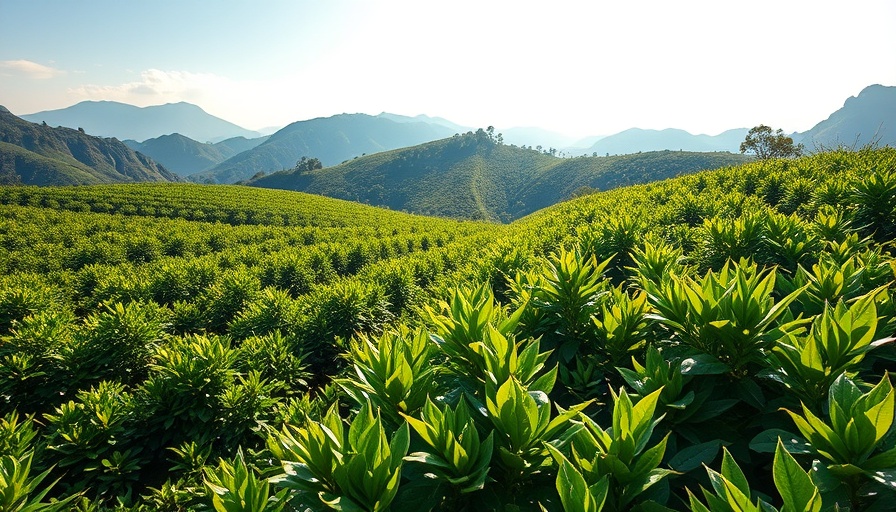
Lush coffee plantation illustrating sustainability in coffee production.

The Formula for Sustainable Coffee: A Delicate Balance

In today's competitive coffee market, the challenge of ensuring sustainability while maintaining high quality and productivity is increasingly vital. As we examine Brazil's extensive contributions to global coffee production, it becomes clear that the best production model is one that combines innovative practices with environmental consideration. Around the globe, coffee producers are not only facing climate change but also navigating economic volatility and rising consumer demand for sustainable products. So, what truly is the formula for sustainability in coffee production?

A Diverse Landscape of Coffee Farming

Brazil is home to an intriguing contrast in coffee farming, with thousands of smallholder families operating on less than 10 hectares, in stark comparison to large estate owners with over 200 hectares. This diversity fosters an environment ripe for innovation amidst growing pressures. Each farming system represents unique adaptations and knowledge-sharing that maintain and enhance their productivity while considering sustainability.

Cross-Pollination of Knowledge: Technological Growth

The connections between large and small producers dramatically shape agricultural practices. Larger farms are more likely to experiment with emerging technologies, such as advanced irrigation systems or genetically resilient coffee varieties. These innovations often seep down to smaller farms, fostering resilience throughout Brazilian coffee farming communities. For instance, drip irrigation, initially proven effective on the larger estates, has become a widely accepted practice among smaller producers, significantly improving water use efficiency.

Ethics in Coffee Production: The Consumer's Role

As consumers increasingly seek out ethically sourced coffee beans and gourmet coffee experiences nearby, the market is shifting toward sustainable practices. Coffee shops are now recognizing the importance of serving high-quality coffee that is also ethically produced. Establishments that offer single-origin beans, fair trade options, and other luxury coffee experiences cater to a discerning clientele who value accountability and sustainability, thereby driving producers to align their practices with these consumer expectations.

The Future of Coffee: Innovation Amidst Challenges

The future of coffee production lies in the capacity of farmers, both large and small, to adapt to changing conditions. Innovations in farming techniques and technology will continue to play a crucial role, yet farmers also require support from the community, including consumers and policymakers. Addressing sustainability issues means balancing productivity with environmental stewardship, thereby ensuring that the beloved beverage remains accessible for generations to come.

As coffee enthusiasts, understanding the intricacies of coffee production helps us appreciate that each cup of coffee is more than just a drink; it embodies the hopes and innovations of those who produce it. By supporting coffee shops committed to ethical sourcing and sustainability, such as luxury sit-in coffee cafes or specialty coffee shops offering Chemex coffee, we contribute to a future where quality coffee thrives sustainably.

Coffee Shops

5 Views

0 Comments

Write A Comment

*
*
Related Posts All Posts
02.14.2026

Unveiling the Truth: Organic Soils Outperform Conventionally Farmed Coffee Grounds

Update The Green Revolution's Legacy and Soil Health As the term 'Green Revolution' echoes across agricultural landscapes, its impact on soil health, especially within the coffee sector of India, has come under renewed scrutiny. A recent study from the Western Ghats reveals that organic coffee soils significantly outperform their conventional counterparts, which have long been reliant on synthetic inputs. This research not only highlights the ecological consequences of traditional farming practices but also celebrates the potential of organic methods to restore soil vitality. Study Insights: Organic vs. Conventional Soils Conducted by researchers affiliated with the University of Agricultural Sciences in Bangalore, the study measured soil quality across organic and conventional coffee farms in Karnataka's Kodagu district. Organic soils boasted a Soil Quality Index (SQI) score of 0.98 compared to just 0.87 for conventionally farmed soils. This surprising revelation is attributed to enhanced organic carbon and biological activities which play a pivotal role in nutrient cycling and overall soil health. The Carryover Effects of Chemical Dependence The Green Revolution, originating in the 1960s, ushered in synthetic fertilizers and high-yield crops with the intention of boosting food production. However, decades of chemical application have inadvertently led to soil degradation and a decrease in microbial diversity. The aforementioned study argues that this chemical dependency disrupts ecological balance, insinuating that a return to organic farming methods could serve as a remedy. The Importance of Soil Microbial Diversity Healthy soils are a living organism themselves, teeming with microbial life that plays a critical role in maintaining nutrient levels necessary for robust coffee production. The research conducted indicates that organic coffee farming enhances microbial resilience, resulting in richer and more fertile soils. This biodiversity not only supports plant health but also strengthens the ecosystem, thereby offering a sustainable approach to coffee cultivation. The Future of Coffee: Recommendations for Consumers and Producers As consumers become increasingly aware of the environmental and health impacts of their coffee choices, the shift towards organic coffee is gaining momentum. Coffee lovers should seek out ethically sourced, organic blends offered by local coffee shops dedicated to sustainable practices. Notably, establishments such as gourmet coffee cafes and high-end espresso bars are embracing these values, promoting organic offerings highlighted for their superior taste and environmental benefits. Final Thoughts: A Call for Sustainable Practices Understanding the ramifications of farming practices on soil health not only serves producers but also empowers consumers. The preference for organic coffee does not simply end in the enjoyment of a cup; it extends to supporting agricultural reforms that prioritize sustainable methods. As the coffee community continues to evolve, fostering a dialogue about the importance of soil health and the viability of organic practices remains essential.

02.13.2026

Remembering the Ruskeys: Pioneers of California's Specialty Coffee Movement

Update The Legacy of Jay and Kristen Ruskey: Pioneers of California Coffee The specialty coffee world is reeling from the loss of Jay and Kristen Ruskey, who tragically passed away on February 8, 2026, in Cambria, California. Known for their groundbreaking efforts with Good Land Organics and Frinj Coffee, this married couple changed the way people think about coffee cultivation in California. Their dedication to sustainability and organic farming practices, alongside their supportive community roles, painted a portrait of two individuals deeply ingrained in both agriculture and camaraderie. A Vision for California Coffee Jay Ruskey, often referred to as a visionary in organic agriculture, was determined to prove that California could indeed produce specialty coffee. As the founder of Frinj Coffee, he harnessed the potential of roughly 70 farms from Santa Barbara to San Diego, setting a precedent for coffee growing beyond traditional regions. His endeavors achieved significant accolades, including a record-breaking sale at the DMCC Dubai Coffee Auction—$256 per kilogram for a Gesha-variety coffee, showcasing the quality and potential of California-grown coffee. A Commitment to Ethical Practices The Ruskeys were champions of equitable treatment in the coffee supply chain. In past interviews, Jay voiced concerns about the global coffee industry, citing that farmers in regions like Guatemala and the Congo receive a mere fraction of the value of their crops. This advocacy for farmers led to a ripple effect, inspiring many within the sustainable coffee movement to pay attention to fairness in crop pricing and sustainability. Community Support and Legacy Future As the coffee industry mourns this significant loss, the community is rallying to support the Ruskey family through a Gofundme campaign, which has already raised over $125,000. Jose Caballero's efforts to provide for the Ruskey children and cover funeral expenses reflect the community's gratitude for the couple's contributions and the impact they made in their lives. Continuing the Frinj Coffee Mission Frinj Coffee is committed to continuing Jay Ruskey's legacy, vowing to uphold the values of quality, sustainability, and community support he championed. The company's promise to press on in his honor highlights a crucial sentiment in the specialty coffee world—while individual voices may be silenced, their legacies can inspire lasting change. As you explore the world of specialty coffee, consider supporting artisan coffee shops committed to ethical sourcing and the communities that nurture such practices. Check in at local venues that prioritize high-quality, single-origin beans, and seek out coffee experiences that emphasize not just taste but the story behind your cup.

02.11.2026

CafeClima: Revolutionizing Climate-Smart Coffee Replanting Decisions

Update Understanding CafeClima: A New Era for Coffee Sustainability The recent launch of CafeClima, a free web platform by World Coffee Research (WCR), aims to revolutionize the way farmers approach coffee replanting amidst climate change challenges. This innovative tool not only serves as a decision-support system but also underscores the critical need for data-driven insights in the coffee farming industry. With billions of aging coffee trees in need of replacement, the timing of this launch is crucial for the future of sustainable coffee cultivation. Addressing Climate Challenges in Coffee Farming With projections indicating that up to 50% of the land currently suitable for producing arabica coffee could become unsuitable by 2050, the urgency for tools like CafeClima cannot be overstated. Past investments in coffee farm renovation have reached nearly $1.2 billion, but efforts have only impacted 5% of smallholder farmers, highlighting a significant gap in necessary action. The CafeClima platform seeks to fill this gap by providing localized climate data to help farmers determine the best varieties to plant for future conditions. Empowering Decision Makers with Data CafeClima utilizes advanced climate modeling alongside extensive performance data from global variety trials to help users make informed planting decisions. Users can identify "climate analogs"—current locations that may resemble future climates in specific growing areas—allowing for comparisons of how various coffee varieties might perform under new climate scenarios. This empowers farmers, agronomists, and investors alike to minimize risks associated with new plantings. A Step Toward Regenerative Coffee Practices The launch of this platform comes at a time when the coffee industry is called to invest more robustly in regenerative practices. A recent report suggests a $4 billion investment towards creating climate-resilient coffee systems over seven years. Tools like CafeClima are essential in ensuring that money is well spent and that high-quality coffee can continue to be produced even in rapidly changing climates. The Future of Coffee is Now As coffee enthusiasts and consumers seek the best specialty coffee shops nearby or the top-rated artisan coffee shops in London, it’s also important that they understand the efforts being made behind the scenes. The emergence of tools like CafeClima illustrates a commitment to preserving coffee quality and sustainability, setting a higher standard for how coffee is cultivated and enjoyed. Join the Movement for Sustainable Coffee By educating yourself about these platforms and supporting coffee brands that invest in sustainable practices, consumers can play a pivotal role in the future of coffee. Look for coffee shops that source ethically, offer single origin beans, and focus on providing a premium coffee experience while contributing positively to their local economies and environments. Your choices can shape the future of coffee cultivation and consumption.

Terms of Service

Privacy Policy

Core Modal Title

Sorry, no results found

You Might Find These Articles Interesting

T
Please Check Your Email
We Will Be Following Up Shortly
*
*
*